End of the Road, But Before We go. . . . (Part 2)
For a little bit of History on SOS, check out Part 1 of this blog post!
I won’t bury the lead, especially since it is pretty much spelled out in the title. Safe Omaha Streets is disbanding.
The decision didn't come quickly or easily, but it is the decision I have made. A variety of life issues over the past six months have made me reevaluate this unpaid labor of love. And months of assessment led me to this decision. It stuns me at times how much I have learned over the past four years, and how many amazing people I have met. (Check out Part 1 of this post for a quick list of some of those folks). And even though I feel we accomplished a lot (also covered in Part 1), at times it feels like we haven’t even nudged the needle, as if this volunteer position was not creating any noticeable or measurable change, and yet I was putting enough effort into it that it was distracting me from my desired focus on other endeavors.
So it is the end of the road for Safe Omaha Streets, but before we go, I want to lay out what I see as needs for the future.
Fatalities Continue
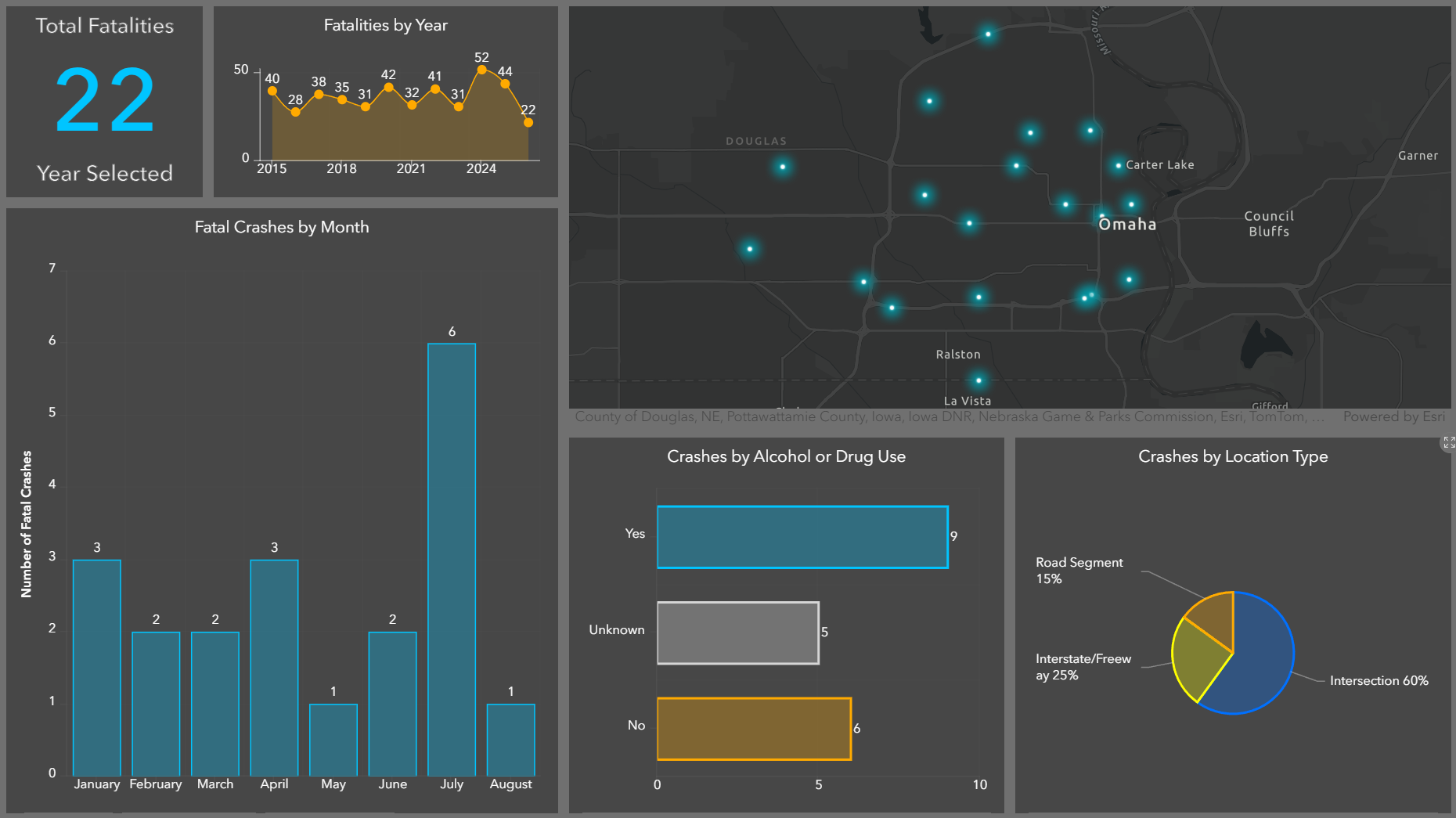
We started Safe Omaha Streets (SOS) over four years ago, and yet last month alone (July 2026), there were six fatalities on Omaha’s roads according to the Vision Zero Omaha Crash Dashboard. Two of those crashes involved alcohol and resulted in the deaths of two children, Prestin and Zaiden Strassenburg, and motorcyclist advocate, Ryan Hay.
The Crash Dashboard shows that 22 people have lost their lives on Omaha’s roads in 2026. Keep in mind, the dashboard doesn’t include data on serious injuries or other crashes, but strictly presents fatality data. Even crashes without injuries, but with property damage, can cause a cascade of negative effects from emotional trauma to financial burdens.
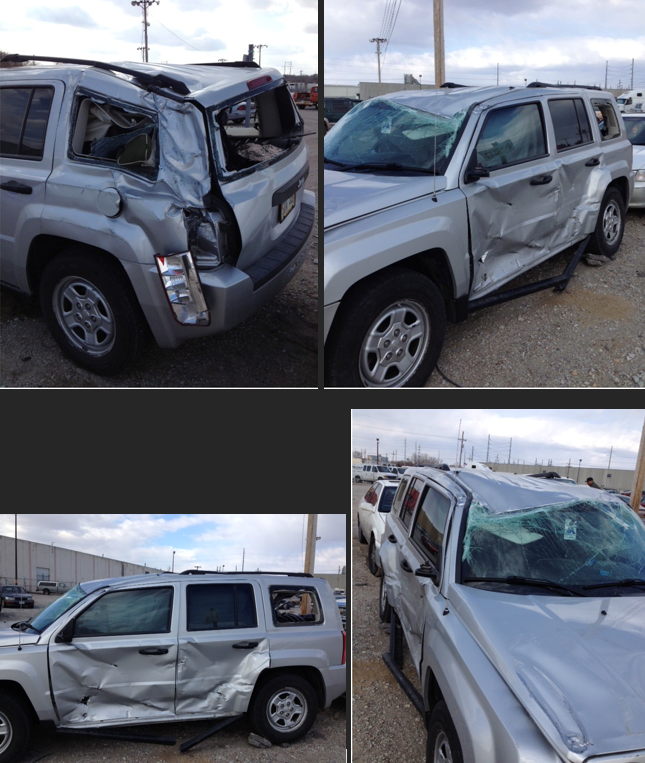
In 2014, my best friend and I were in a crash that resulted in the damage to his Jeep below. He had minor injuries, and I had none, but the incident absolutely ramped up my driving anxiety to an - at times - unmanageable level. Crashes like ours aren't reflected in current datasets, but they affect Omaha residents every single day.
The Problem is Too Big for SOS
Fortunately, the City is in the process of updating the crash dashboard to include serious injuries, data analysis, and project tracking.
Data matters because it helps residents, leaders, and municipalities identify problems and drive effective solutions. The failure of data tho is that it does not capture the “feelings” of unsafe roadways. The “feeling” part of Omaha’s roads is what affects me and so many others on a daily basis. Do you feel safe driving in Omaha? And if you do, do all of your loved ones?
The problem of safe transportation in the City of Omaha is too big for one organization, and definitely too big for our little grassroots group. It is too big for the City of Omaha’s Vision Zero program. It is too big for other amazing organizations like Keep Kids Alive Drive 25, Strong Towns Omaha, Bike Walk Nebraska, National Safety Council Nebraska Chapter, and Project Extra Mile. Maybe a coalition of these groups could make a dent in the problems on Omaha’s roads, but that coalition would still face obstacles at the state level. State-level change is a goal of Safe Streets Nebraska, but I am unsure how active this organization is; they have tho laid the groundwork for great work in the State and may be a placeholder for future effective change.
Needs for a Safer Future
Omaha, like many other cities, has a road safety problem. It is not a problem that can be solved by infrastructure alone, and yet the City has been doing – and continues to do – great work regarding infrastructure improvement. Beyond infrastructure, Omaha still needs MORE. More traffic enforcement. More education. More impaired-driving reform. More protected bike lanes. More safety advocacy. More more more. It’s not just the city tho, the state also needs MORE. The State of Nebraska needs to pass more thoughtful, safe transportation legislation because city-led efforts can be hamstrung by state laws.
More Enforcement Means More Education
Since day one, SOS has advocated for automated enforcement; however, it remains illegal at the State Level.
There is great debate about the value of traffic enforcement, but one surprising benefit is the education drivers receive through ticket deferment programs. This is especially important since a certified driver’s education course is not required to obtain a license in the State of Nebraska. When I was in high school in the 1990s, driver’s ed was still offered in the high schools. But now, teen drivers can obtain their first operator’s permit by submitting a log documenting 50 hours of adult-supervised driving. And considering the cost of certified driving programs (usually over $400), it’s no wonder many families choose the “adult supervision” route. Even as well-versed as I am in safety and good driving habits, I wouldn’t want to be the one responsible for teaching a teen to drive safely in Omaha.
All this to say that a backdoor way to offer education comes in the form of the STOP/STAR Traffic Dismissal courses offered by the Nebraska Chapter of the National Safety Council. Traffic ticket dismissal programs are a roundabout way to educate drivers in a certified program. According to Eric Koeppe, president/CEO of the Nebraska Chapter of the National Safety Council, over the past four years his organization has “averaged 4,700 students in traffic ticket dismissal across all the jurisdictions.” He emphasized that “It is an important opportunity to provide this vital education in the areas we serve in Nebraska.”
But to access the education, unsafe drivers need to first be pulled over and ticketed.
The Omaha Police Department participates and/or hosts a variety of high-visibility traffic enforcement events. Specifically, the OPD recently participated in the NHTSA’s “Speeding Catches Up With You” operation from July 27 to August 9. Additionally, many leaders will work with the police department to solve traffic issues in their neighborhoods via special enforcement operations, the way Councilperson Pete Festersen has done regarding speeding and racing in midtown, where OPD made 100 arrests and issued 715 citations for reckless driving and street racing along Dodge Street during March and April 2026.
Even with these admirable efforts, however, fewer citations have been issued by traffic enforcement in Omaha since 2020. See the table below (based on raw data provided by the Omaha Police Department) for a list of citations issued from 2015 through 2024.
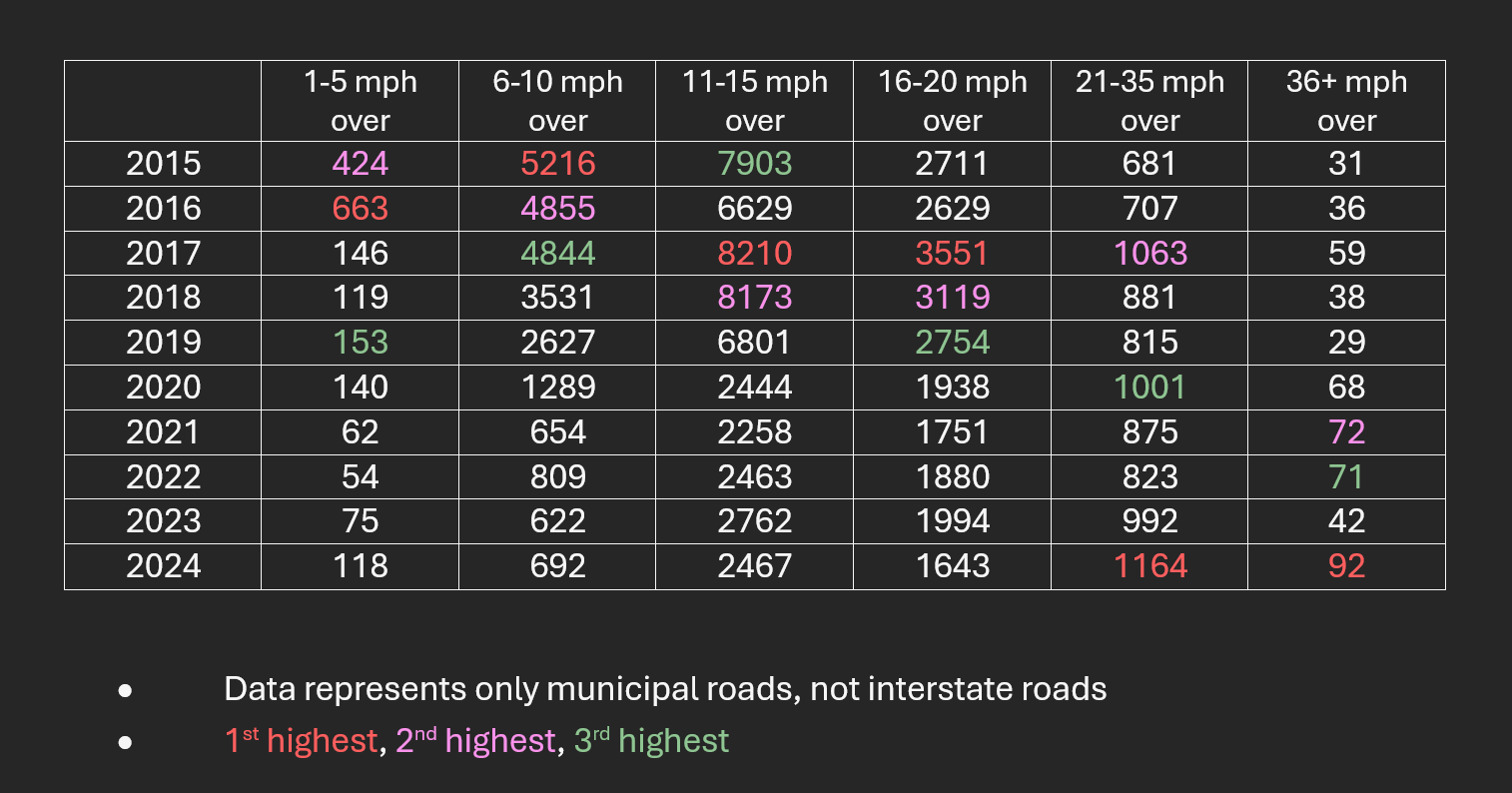
The data above does not prove a cause, but we can use it to theorize that:
a) the drivers of Omaha have shaped up and are driving so safely that fewer citations are warranted, OR
b) that just as many people are operating their vehicles unsafely, they just aren’t being cited, OR
c) a little bit of both.
You WILL see above, though, that the two categories where we’ve seen MORE citations issued than in the past are for the most excessive speeds (21+ mph over the speed limit and up). This could be a result of OPD’s racing/reckless driving enforcement operations, or we could just have more reckless racers on the roads than before. As my partner and SOS co-founder, Jim, always reminds me, cars are more powerful now than ever before; thus, reaching top speed may be more accessible to more drivers.
When debating the need for enforcement, remember that citations can also provide an avenue to safe-driving education.
Omaha Has A Drinking Problem
Omaha has an alcohol problem, especially when it comes to impaired driving, a problem witnessed tragically in recent deaths.
In February of 2023, I attended a variety of working groups for the Vision Zero Technical Advisory Committee, one of which focused on impaired driving (distracted driving, alcohol and drugs). I learned an incredible amount at that meeting. One of the things I hadn’t considered when it comes to preventing drunk driving is the judicial system - everything from plea bargaining to probation. The details were beyond my ken and sounded terribly complex, but I realized then that drunk driving has just as much to do with the judicial system as it does with alcohol availability or enforcement.
I testified in support of the Vision Zero Action Plan when it was in front of City Council in November 2023, and in that supportive testimony, I included this section about alcohol:
As the City works toward zero deaths and serious injuries, we do urge leaders to bolster the efforts to curb the presence of alcohol-impaired drivers on our roads, especially since data shows over 25% of road fatalities involve alcohol, and that percentage continues to increase. We echo many of the recommendations included in the submitted written testimony of Chris Wagner from Project Extra Mile, who also served on the TAC.
In 2026, NINE of the twenty-two fatalities on our roads involved confirmed alcohol or drugs. That is 40% of this year's fatalities. So the situation is worse in 2026 than it was when I testified in 2023. See the image below from the City’s Crash Dashboard.
The table below was created with raw data provided by the Omaha Police Department. This is not an exhaustive list of impaired driving offenses, as there are a variety of other categories, such as 1st offenses for drugs and alcohol, refusal to submit to a test, 5th offenses, etc. But it does indicate that we have a re-offending problem on our roads when it comes to impaired drivers. It is encouraging that the numbers are going down, but as discussed above, is that because we have fewer drunk drivers on the road, or because we have less enforcement?
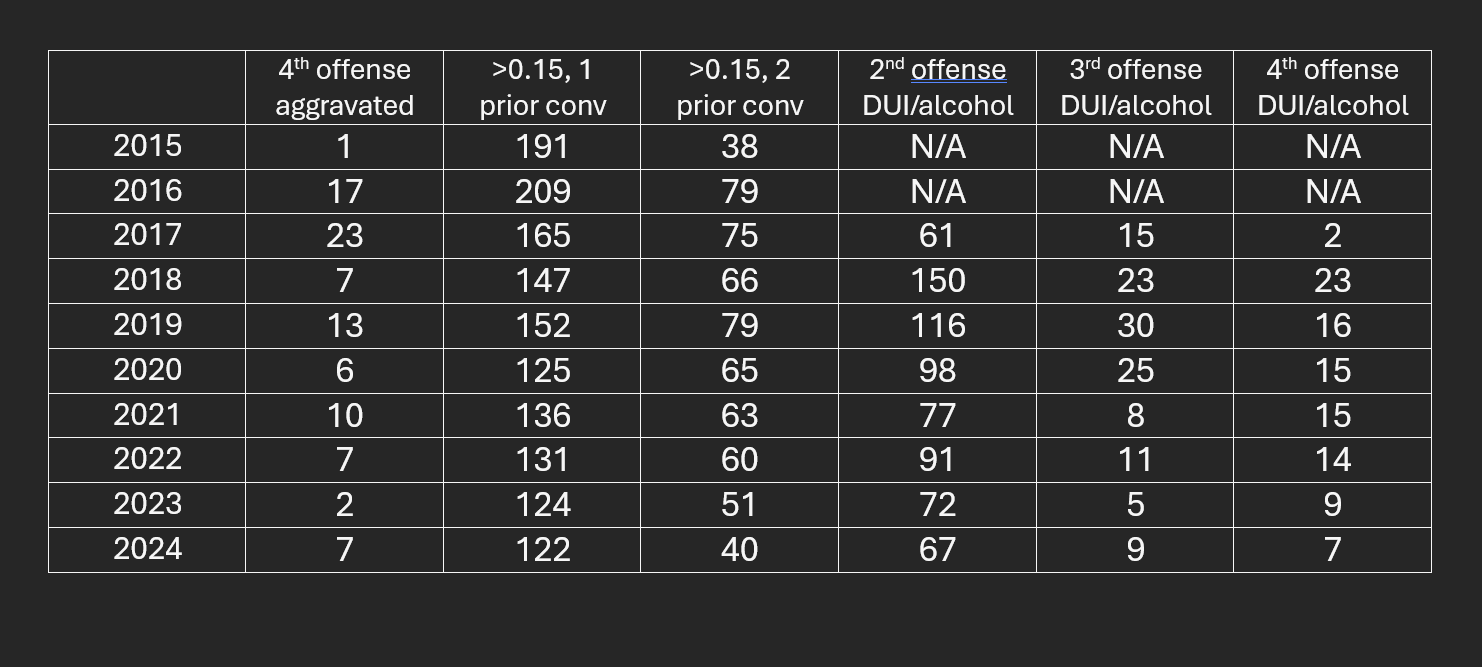
We need a city-wide, deep-dive investigation into how DUI offenders and re-offenders are prosecuted, tried, handled, released, monitored, etc. Whether Omaha Vision Zero, a local university, or a local non-profit should spearhead this is beyond me, but I believe we need a better understanding of the judicial system as it relates to recurrent impaired driving in the City of Omaha.
We Can’t Get it Right at the City Level if it’s Broken at the State Level
It wasn’t until I served on the Vision Zero Technical Advisory Committee that I clearly, and painfully, understood how behind the State of Nebraska is in safe traffic legislation. At the end of last year, Advocates for Highway and Auto Safety gave Nebraska a failing grade based on its lack of safe driving legislation. Their 2026 Roadmap to Safety did not fare any better for our state, as you can see in the “States-at-a-Glance” below:
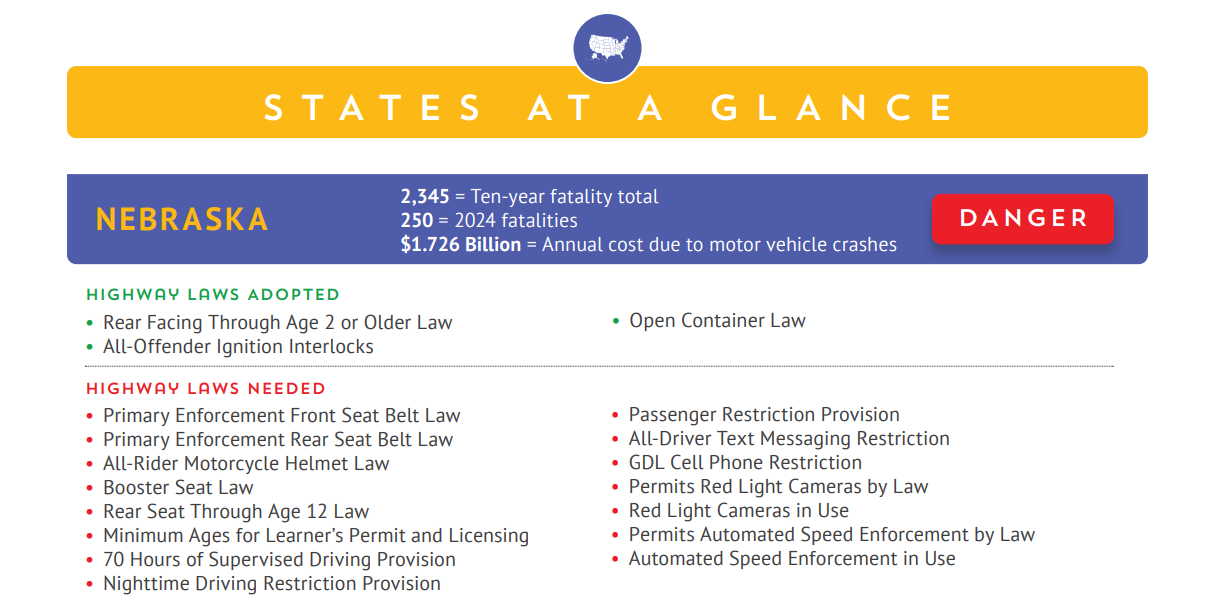
Municipalities in Nebraska are hamstrung by a lack of safe traffic legislation. We absolutely need enhanced state legislation to improve road safety. This deficit of safety laws is not due to lack of trying, as safety advocates have been working passionately and diligently for years. This is a failure of our legislature as a whole. We need thoughtful bipartisan support for safe laws in our state.
I am intimate and well-versed in local transportaion advocacy, and could go on and on about the issues on our roads, such as red light running, speeding, variable speeds, poor zipper merging, passing on the right, impaired driving, road rage, etc etc, but the point of this post was to
a) say goodbye, and
b) leave a call to action for more change.
Until then. . .
We will leave the SOS website up until the end of 2026. We have a lot of great content in our blog posts, newsletters, and special projects. Take a stroll through those resources, and let me know if you’d like to host any on your own platforms! We’d love for some of this information to live on and provide information to the safety-curious.
And in case you don’t read Part 1, here’s the section of that post that called out some incredible VIPs!
A shout-out to some of the amazing individuals I came to know, or got to know better, and respect through my work with SOS:
Jeff Riesselman, Jeff Sobczyk, Austin Rowser, Nick Gordon, Tom Everson, Cindy Tefft, Jim Boerner, Evan Schweitz, Nicole Ebat, Tim Adams, Derek Miller, Don Rowe, Danny Begley, Pete Festersen, Chris Wagner, Carlos Morales, Alex Mendoza, and Neal Bonacci.
I’m sure there are more, but SOS could not have accomplished what it did without these folks.
And honestly, SOS wouldn’t have lasted a month without the support and enthusiasm of my friends and family too:
Jim Pattavina, Barbi Hayes, Megan Thomas, Doug Kabourek, Elisabeth Percival, Craig Hoffman, Kristin Ndoda, Dana Freeman, Stuart Shell, Molly Pool, Danny Stewart, Julie McIntire, Pat Weddle, Farrah Grant, Nick Wennstedt, Jen Schantz, Maureen Konwinski, Larry Wade, and likely a million more folks who buttressed me.
Thank you to the whole Omaha community!
~ Trilety